Automotive

Laser systems cover permanent marking and gate removal on metals and technical plastics, without consumables and in compliance with traceability requirements (recalls, ELV). For gate removal, laser ablation eliminates tool wear and changeovers, ensuring controlled ablation even on filled materials (PA-GF, PBT) and tight tolerances. Integration with vision systems enables inline quality control and batch management.

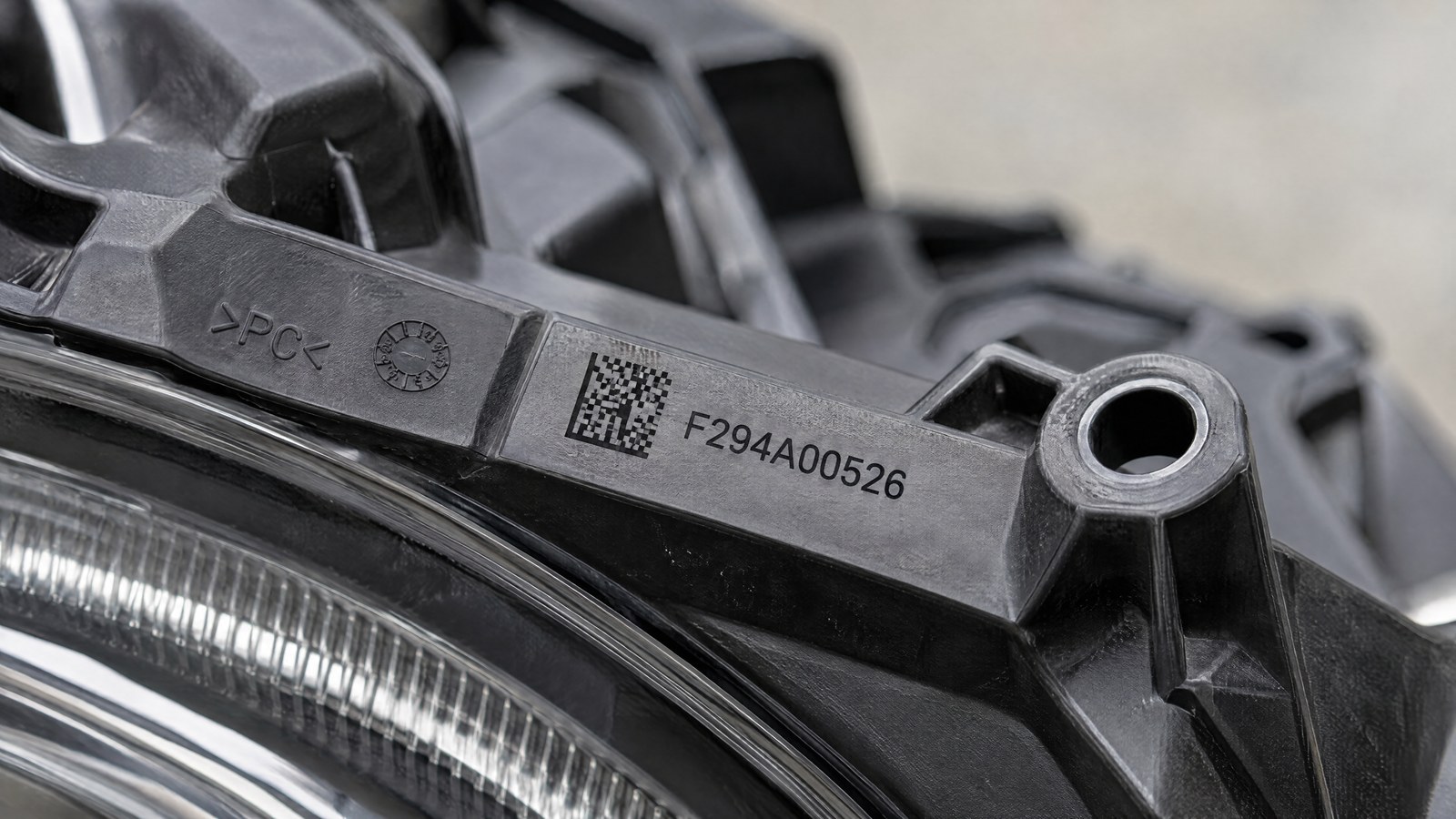
DataMatrix su corpi fanale e lenti senza toccare l'area ottica

DataMatrix on headlamp housings and lenses without touching the optical area

How to trace headlamp housings and lenses with laser DataMatrix without touching the optical area: where to position the code and which source for each polymer.

Read more

Tracciabilità automotive: come la marcatura laser regge un audit IATF 16949

Automotive traceability: how laser marking withstands an IATF 16949 audit

IATF 16949 traceability is not proven by the marked part but by the data chain: reserving the sequential number, in-line confirmation and logging to the MES.

Read more

Laser Marking on Tesa: Configurations and Parameters for Continuous Production

Laser marking on Tesa requires consistent quality but also productive speed when marking. Discover our solutions

Read more

Industrial Adhesive Bonding: Technology, Applications and Process Optimization

This article analyzes adhesive bonding as an engineering technology: from the chemistry of adhesion to operational configurations, from the choice of adhesive system to surface preparation-including the increasingly important role of laser treatment-to joint qualification.

Read more

Laser Cleaning and Texturing for Welding and Adhesive Preparation in Automotive

The choice between cleaning, texturing, or the combination of the two depends on the analysis of the failure mode that is to be prevented: if the risk is chemical contamination, cleaning is sufficient; if a structural increase in mechanical adhesion is required, texturing is the correct lever.

Read more

AUTOMOTIVE01

Laser tracking in electric vehicles: technical guide for cells, busbars and stators

Laser marking exploits the principle of interaction between focused photon energy and the crystalline lattice of the material. Depending on peak intensity and wavelength, the beam can induce three types of surface modification: ablation, blackening by oxidation, and photochemical staining

Read more