

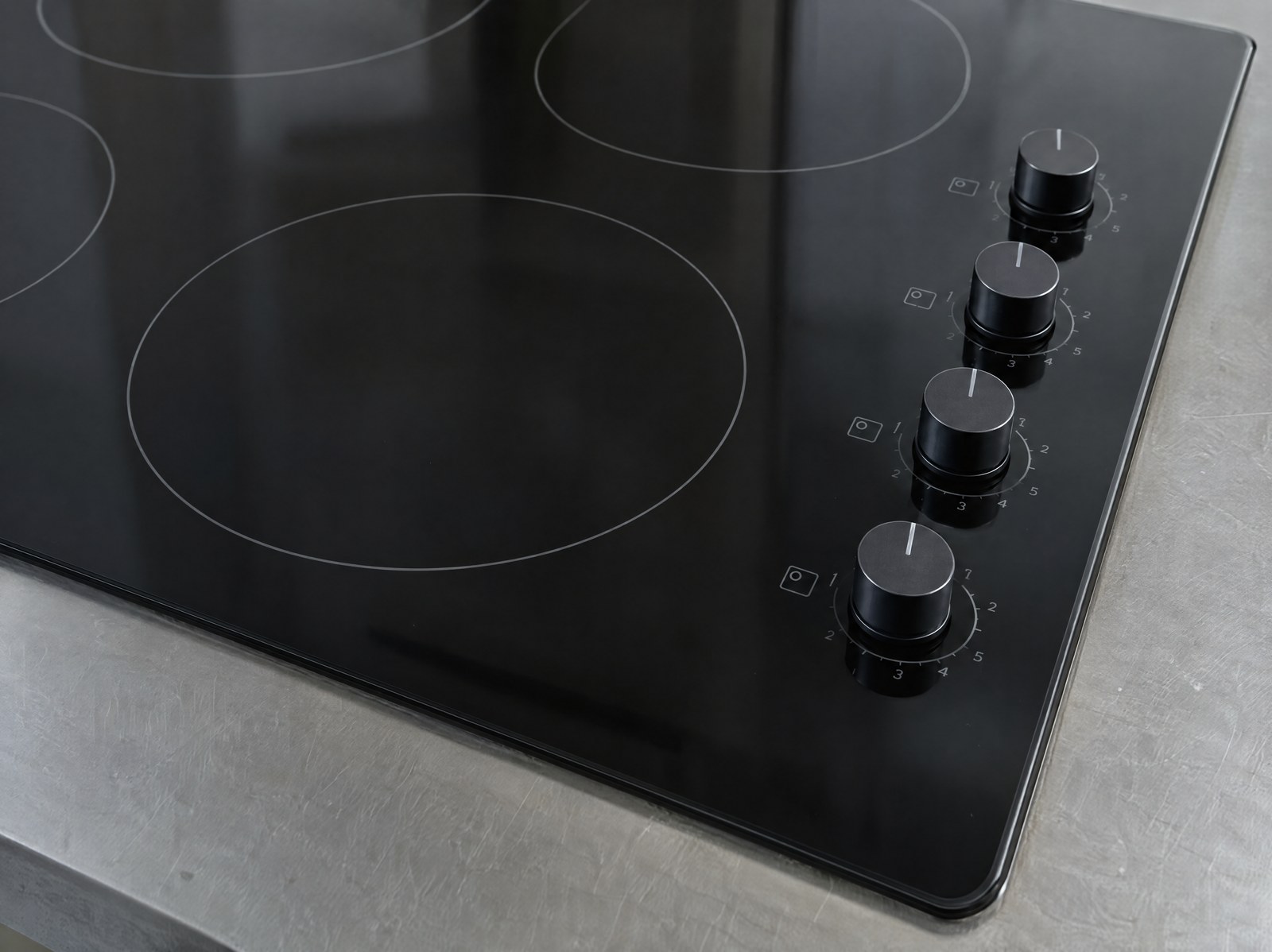
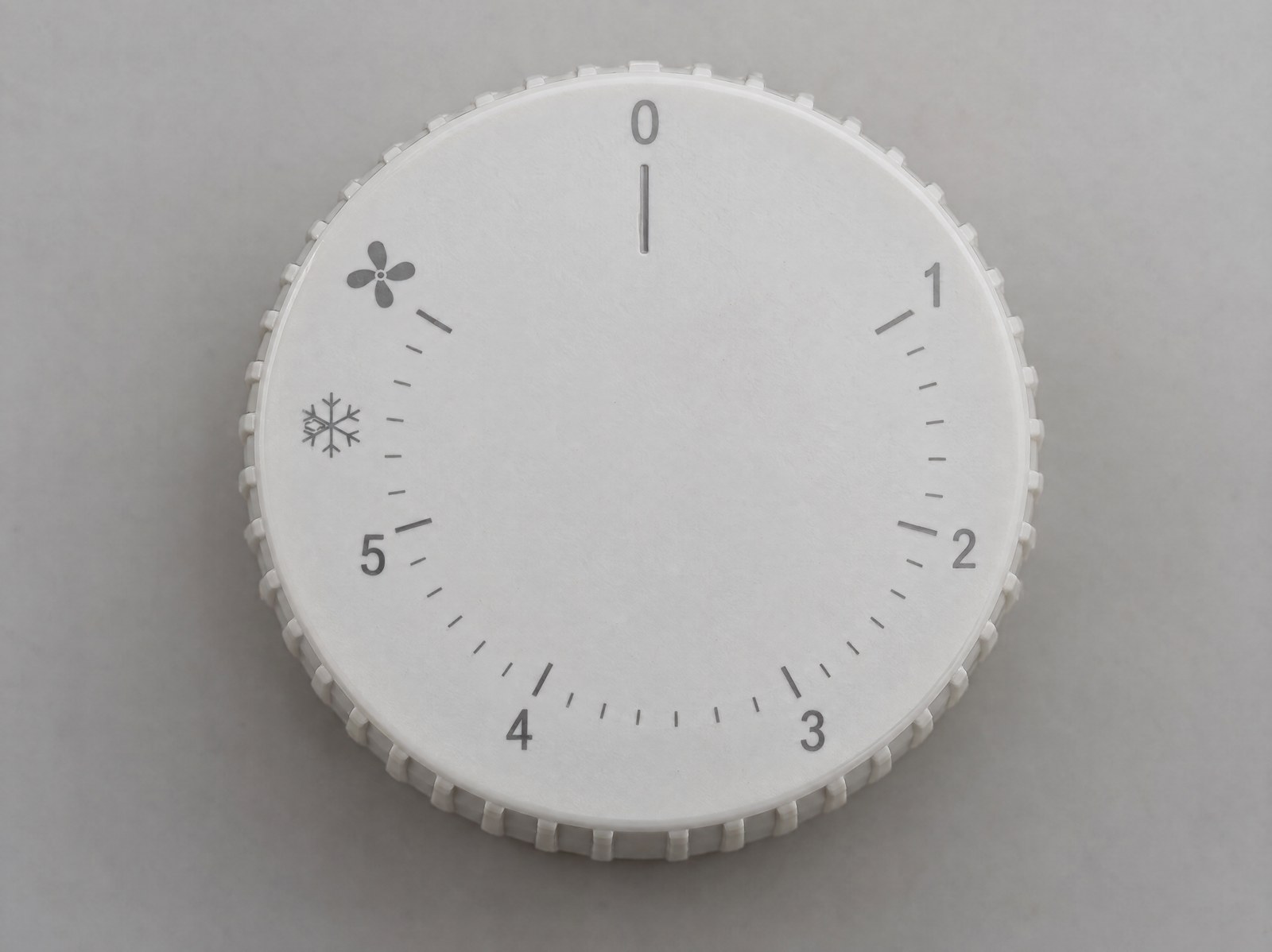
On a domestic-appliance line it often happens that the same marking station sees very different materials pass through within a few minutes: the stainless steel front of an extractor hood, the glass panel of a hob, the knob or the technical-plastic drawer of a fridge. The graphics change little — logos, functional icons, adjustment markings, serial numbers — but the substrate changes everything. And the question the manufacturing engineer asks is always the same: can a single laser source mark stainless steel, glass and plastic well in sequence, or are separate stations needed?
The answer is not a yes or a no. It depends on how the three families of materials react to laser light, on how high the aesthetic bar is on each one and on how unbalanced the production mix is. There are part ranges where a single station covers everything with no perceptible compromise, and others where the same choice forces you to give something up on every material.
The criterion for deciding between a single station and two dedicated stations is not a question of power, but of how far apart the three materials are in terms of their interaction with the beam.
Why stainless steel, glass and plastic “see” the laser differently
The starting point is the wavelength and the way each material absorbs it. The fibre source works at 1064 nm: it is the near-infrared wavelength, absorbed efficiently by metals. On stainless steel this translates into excellent contrast control, from dark annealing with no material removal through to the most pronounced engraving. Glass, however, is largely transparent at 1064 nm: the beam passes through it instead of depositing energy at the surface, and the result becomes difficult to control.
The UV source works at 355 nm. At this wavelength the mechanism changes in nature: the photon energy is sufficient to break molecular bonds directly, through a predominantly photochemical process with limited heat input. This is why UV engraves glass with a clear, crisp mark and marks delicate technical plastics with high contrast without charring or burning the edges of the characters. In essence, every material has its own absorption window, and it is that window that determines which source marks it well.
UV as the broadest compromise across a heterogeneous part range
When the parts to be marked belong to material families that are far apart from one another, UV is the source that covers the widest spectrum with a single configuration. Glass and delicate plastics — precisely the materials on which an infrared source struggles or risks a heat halo — are exactly the ground on which UV performs at its best, thanks to cold marking. And the same beam also marks metal, with a lighter result than fibre but perfectly legible for logos, icons and codes.
This explains why, on a typical home-appliance mix, UV is often chosen as the common denominator. It is the same logic that makes UV the reference technology for the UV laser on plastics and for UV marking on glass: a source that does not ask the material to adapt, but adapts itself to very different materials.
Which combinations a single source really covers
It is worth being explicit about what a single source covers and what it does not, because this is where the wrong decisions get made. Fibre is excellent on all metals — stainless steel included — but on transparent glass it performs poorly. UV covers glass and delicate plastics and also marks metal, albeit with lower contrast than fibre achieves on stainless steel. From this follows a practical rule: if the mix is made up of different metals, fibre is the natural choice; if the mix brings together metal, glass and plastic, UV is the most inclusive source.
| Material | Fibre 1064 nm | UV 355 nm |
|---|---|---|
| Stainless steel | High contrast, dark annealing | Light marking, lower contrast |
| Glass | Poor absorption, difficult result | Crisp mark, cold marking |
| Delicate technical plastics | Risk of burns or halos | High contrast without burns |
The table sums up the reasoning on a qualitative basis: no source wins on every row, but UV is the only one that leaves no cell uncovered. It is exactly the kind of reading needed before committing a line to a configuration choice — far better to reason about how different technologies respond to different materials than to start from the most frequent part and discover the limits on the others.
Recipe management and format changeover in a single station
A station that marks different materials lives on recipes. Each family — stainless steel, glass, plastic — has its own process parameters and its own graphic layout, saved as a recipe in the FlyCAD software and recalled as the part enters. The format changeover is not a heavy set-up operation: it is the switch from one recipe to another, with focus adjustment when the part height changes. The electric Z axis brings the work plane to the correct height without dismantling anything.
Format change at a single stationMaterial recipe recallFocus adjustmentPart positioningMarkingThe robustness of this flow lies in recipe discipline, not in improvised automation. Parameters validated on real samples, a frozen layout, focus tied to the known part height: this is how the same station moves from the stainless steel front to the plastic knob while maintaining a repeatable result mark after mark.
Positioning heterogeneous parts under the same field
Marking different materials in the same station also means positioning them consistently under the laser field. Parts of very different shape and bulk call for fixtures that fix their references in a repeatable way, so that the graphics always fall within the intended area. Where the part or the graphics do not have a perfectly deterministic position, a TTL vision system identifies the reference and aligns the marking, correcting small loading deviations.
The factor that weighs most, when marking heterogeneous parts, is the difference in height. A flat front and a turned knob do not sit on the same focal plane: without orderly management of the focus height, the same recipe that is perfect on one part comes out of focus on the other. It is a trivial point to check at the study stage and a costly one to discover in production.
When the three materials are too far apart: better to have two stations
The single station has a real limit, and it is worth naming it. When the aesthetic bar diverges between the materials, the compromise of a single source becomes visible. If stainless steel calls for a deep, dark, very-high-contrast annealing and, at the same time, glass and delicate plastics call for impeccable cold marking, asking a single source to excel on both fronts means accepting a sub-optimal result somewhere. In that case two dedicated stations — a fibre for the metal, a UV for glass and plastic — are the technically most honest choice.
The mix matters too. If volumes are high and skewed towards one material, the constant recipe changes on a single station fragment the cycle, whereas two stations let each flow run without interruption. Separation, in short, is not a fallback: it is the right answer when the required quality and the production pace pull in different directions. The same principle guides the choice of source in dedicated projects, as in the UV marking of fridge drawers, where the material dictates the technology.
The criterion for deciding: one station or two
The dividing line comes down to three questions. First: how far apart are the materials in terms of absorption? If they all stay within the UV window, a single source covers them; if one of them demands a result that only another source delivers, you are already reasoning about two stations. Second: is the aesthetic bar the same on all parts, or much higher on some? Aligned requirements favour the single station, divergent requirements penalise it. Third: what is the volume mix and the pace like? Moderate, balanced volumes sit well with recipe changes; high, skewed volumes call for separate flows.
The UV-based single station is the right choice for anyone marking a varied part range — stainless steel, glass and plastic — with aligned aesthetic requirements and manageable volumes, who wants a single interface and a single point of oversight. It is not the right choice for anyone who needs maximum annealing contrast on metal together with high-end cold marking on glass and plastic, at high volumes: there, two dedicated stations work better than one that tries to do everything. The decision, as always, is taken on real samples before it is taken on the line drawing.

Business Development Director | LASIT
Business Development Director at LASIT, Giandomenico Ievoli is responsible for the commercial direction and strategic development of the company. He leads business development activities at national and international level, contributing to the growth and expansion of LASIT in global markets.


