Foundry

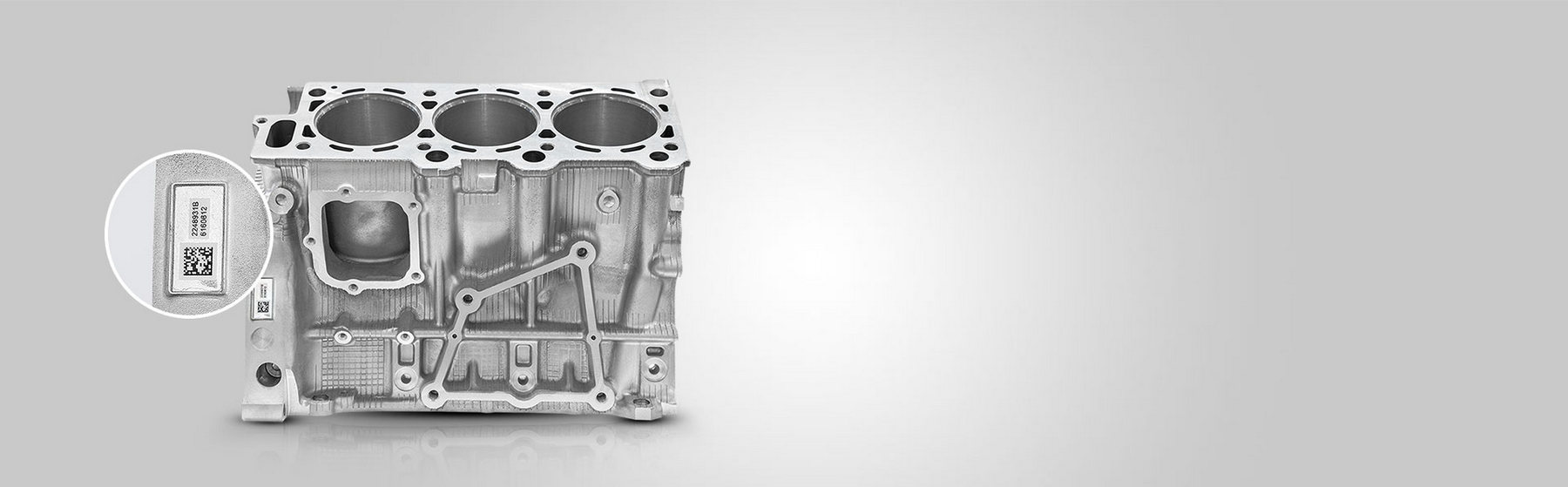
Laser marking identifies cast parts in iron, steel and aluminium directly after deflashing, on irregular and high-roughness surfaces. Codes resist subsequent heat treatments (annealing, hardening, shot blasting) and remain readable throughout the entire lifecycle, enabling cast and batch traceability without additional operations.

Laser engraving on metal

Laser engraving on metal represents an advanced processing technology that is distinguished by its ability to create deep, permanent marks on the surface of metal materials. Unlike laser marking, which is often limited to surface alteration, laser engraving physically removes part of the material, creating grooves and cavities that are not only visible but also perceptible to the touch.

Read more

Can laser engraving resist shot peening?

Because traditional direct marking (DPM) is often insufficient, at LASIT we have developed laser engraving technology that protects 2D codes from the effects of shot peening.

Read more

Why choose laser and not mircopoint marking

Laser and micro-percussion marking systems have some things in common, but there are many advantages of the laser over the older micro-dot technology, so much so that the latter is increasingly being replaced by the laser.

Read more

Laser Engraving in the Foundry Industry

Foundries are the basis of production in almost every industry. They supply virtually all types of factories that produce metal components, of all sizes and types. Let’s look specifically at what industries they are and where laser marking fits into this important industry.

Read more

Laser Marking of 2D Codes for Traceability

Once we understand the enormous advantages of DataMatrix coding, we need to understand how it can be applied to our products. The best way to do this is undoubtedly laser marking, both because it can be applied to so many materials (such as plastics, metals, and wood) and because it allows us to create codes with an extreme versatility of ASCII characters and symbols, which can be modified directly from within the software.

Read more